Sitemaps
Sitemaps are used by search engines and other crawlers to quickly find all the pages of your site. Modern crawlers including Google don't rely on sitemaps and primarily navigate your site by following links, especially on sites with few pages.
How to create a sitemap
When you publish your Umso site, we automatically generate the sitemap for you. It will be hosted at the standard url /sitemap.xml. For example the sitemap for https://www.umso.com can be found at https://www.umso.com/sitemap.xml.
All published sites as well as your blog (if you have one) are included in your sitemap. If you have pages in multiple languages, then every language is included in your sitemap.
How to use your sitemap
You typically don't need to do anything with your sitemap. However you can submit it to Google Search Console to help Google find your pages faster, especially if you have a new site with many pages. SEO tools might also ask you for your sitemap url.
Is my sitemap broken?
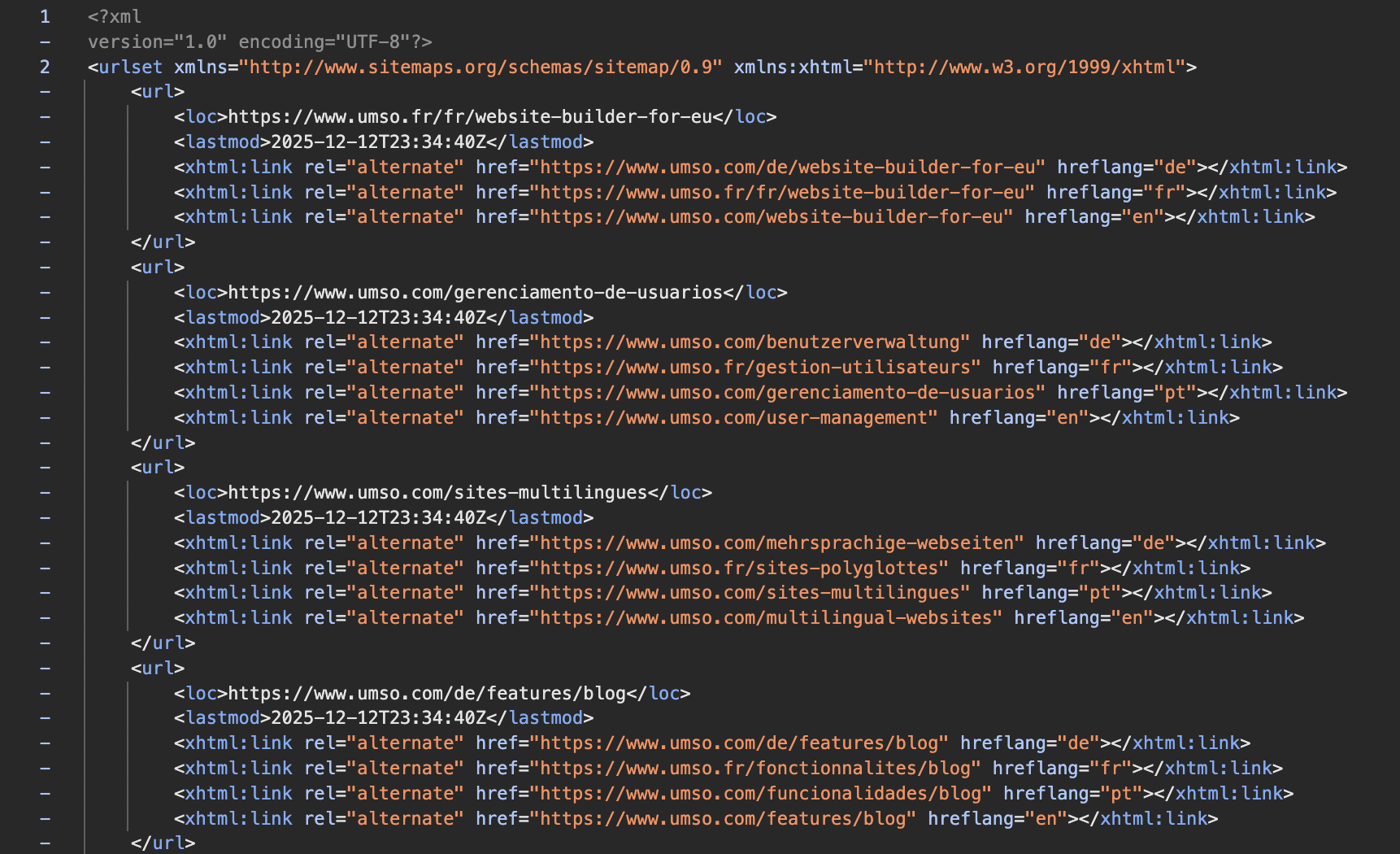
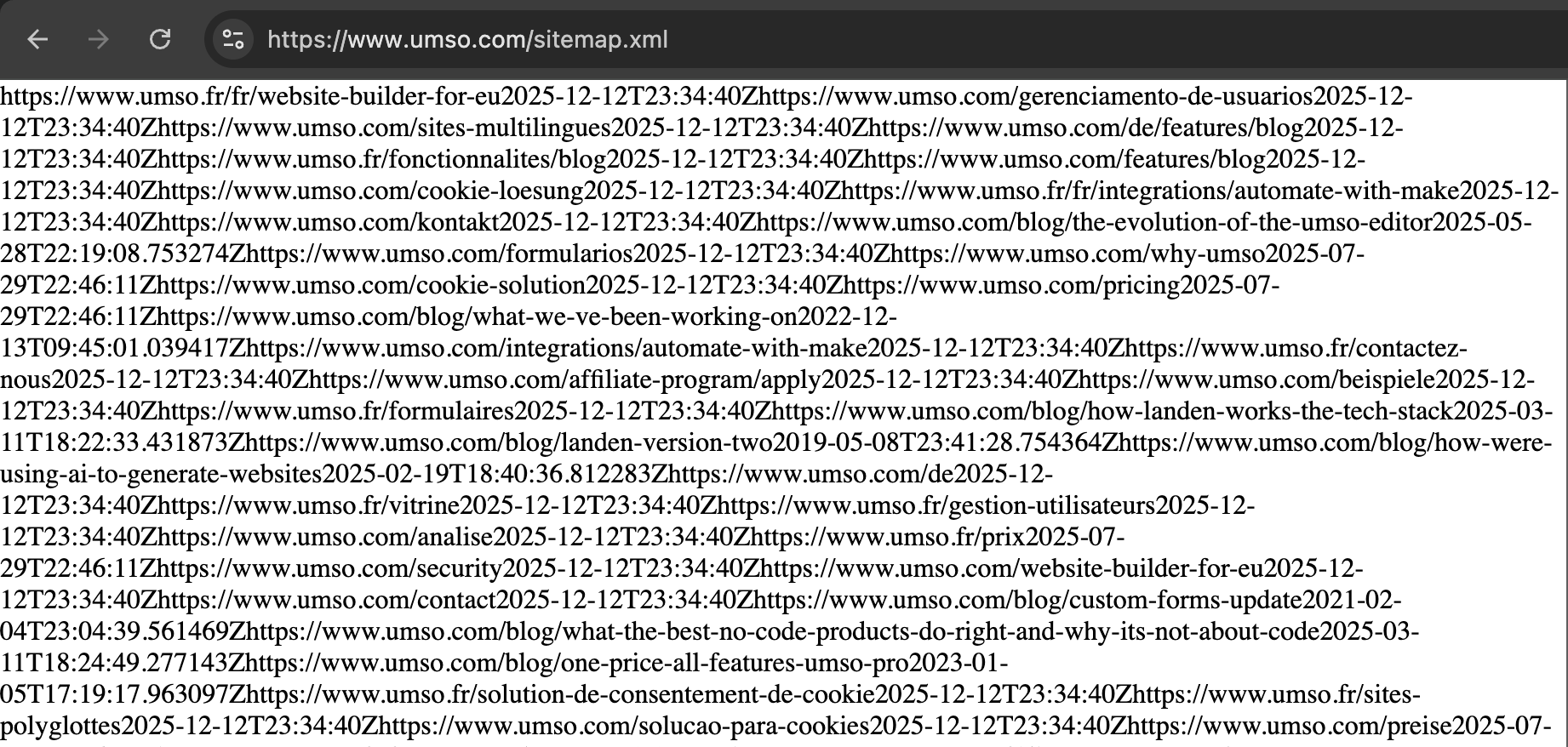
If you open your sitemap in the browser, it might look odd and without formatting. This does not mean your sitemap is broken. Sitemaps are ultimately XML documents which contain structured data that is meant to be read by automated systems.
Browsers can sometimes render these in a pretty way but will fail if they contain more complex information. That's totally fine!
Here is an example for how Chrome renders the umso.com sitemap:
And this is the actual content of the sitemap as automated systems see it: